
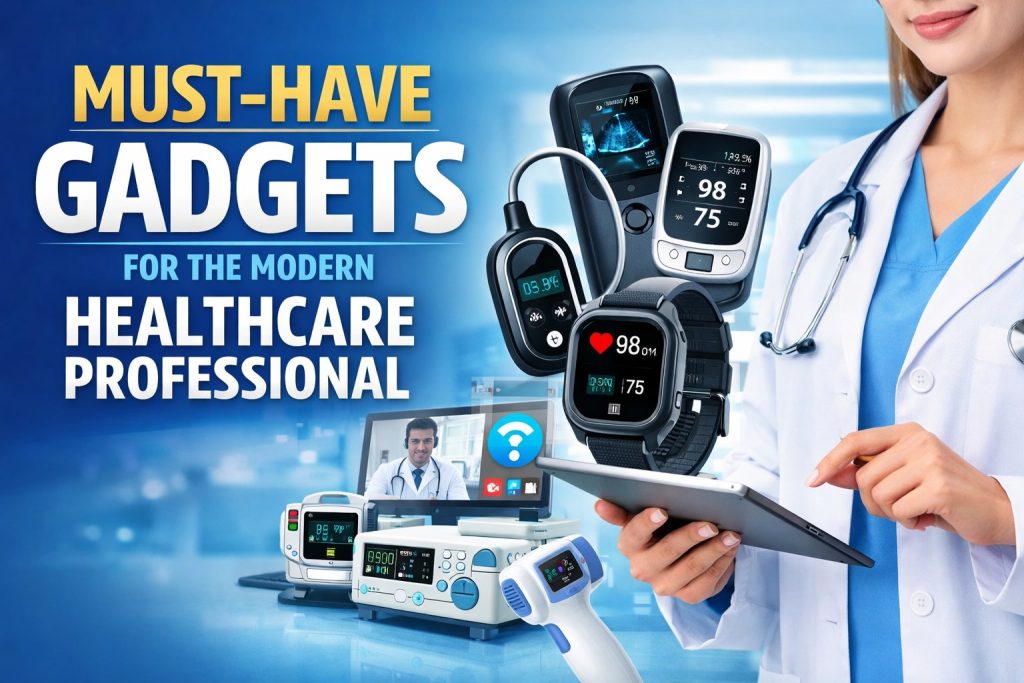
The healthcare industry is changing very fast. Todays doctors, nurses, and clinical staff expected to work faster, handle important and complex cases, and standards of patient care. To make this possible a smart and modern technology is important.
The modern healthcare professionals are relay on the medical gadgets from critical care monitoring to patient monitoring, that helps to improve, accuracy, safety, and efficiency
In this article, we will break down some must have gadgets for todays hospitals and how they are contribute to better patient outcomes.
Digital Smart Stethoscopes
A standard stethoscopes are effective but digital stethoscope offers more clarity and analysis
They Allow:
- Amplified heart and lung sounds
- Background noise filtering
- Recording for future comparision
- Wireless data sharing
The doctors who handles complex cardiac or respiratory cases, it help to reply and analyze sound for more accuracy
Handheld Ultrasound Devices
Compact ultrasound scanners are transforming bedside diagnostics. Doctors can scan patients instantly, instead of sending them to the diagnostic departmens.
These devices are used for
- Abdominal assessment
- Cardiac Screening
- Obstetric Checks
- Emergency trauma evaluation
Faster imaging helps to quick treatment decisions, especially in emergency situations.
Portable ECG Monitors
Now, in modern technology, cardiac assessment no longer requires a heavy machine, Handheld ECG devices provide quick readings within minutes
Advantages
- Compact Size
- Rapid report generation
- Cloud storage options
- Easy integrations with patient records
Mainly used in emergency rooms for quick actions
Wearable Patient Monitoring Devices
Wearable health technology is important for continuous tracking
These devices monitor
- Heart rate
- Oxygen saturation
- Respiratory rate
- Sleep patterns
Continuous data collection helps in early detection of deterioration, reducing unexpected complications
Smart Infusion Pump
A small error in medication may cause the serious problem. Smart infusion pumps are made to deliver accurate dosage and trigger alerts if irregulating occur
They offer
- Controlled flow rates
- Digital dosage settings
- Alarm systems
- Usage tracking.
Non-Contact Diagnostic Tools
Infection control is challenging and a priority task. Infrared thermometers and other contactless devices reduce the risk of cross contamination
They are mostly used in
- OPD Screening
- Emergency triage
- Neonatal Units
- High risk wards
Tablet Based Clinical Documentation
Mobile tablets connected to hospitals management systems allows Realtime updates to patient records. You can see the patient history, old reports and documents for a effective treatment
Benefits Inludes
- Instant access to medical history
- Digital prescriptions
- Lab result tracking
- Reduced peperwork
- Helps in Internal Coordination
Telemedicine Equipment
Online or remote consultation is now a normal part of the healthcare industry, Telemedicine kits kits typically include diagnostic attachments, cameras, and communication platform.
They help:
- Expand specialist access
- Support rural healthcare
- Reduce patient travel
- Maintain continuity of care
Technology Works Best With Proper Infrastructure
Gadgets help to improve diagnostics and monitoring, but they perform best within structured clinical environments. For example
- Monitoring devices need stable patient positioning
- Emergency diagnostics needs organised mobility systems
- Neonatal gadgets functions efficiently in temperature controlled areas
Means the smart tools and reliable hospital infrastructure must work together for optimal outcomes
Modern doctors rely on advanced gadgets to deliver accurate, efficient, and safe patient care. Technology is now an integral part of the daily medical procedures.
Hospitals that adopt the right mix of medical gadgets and infrastructure create safer environment and faster workflows.