
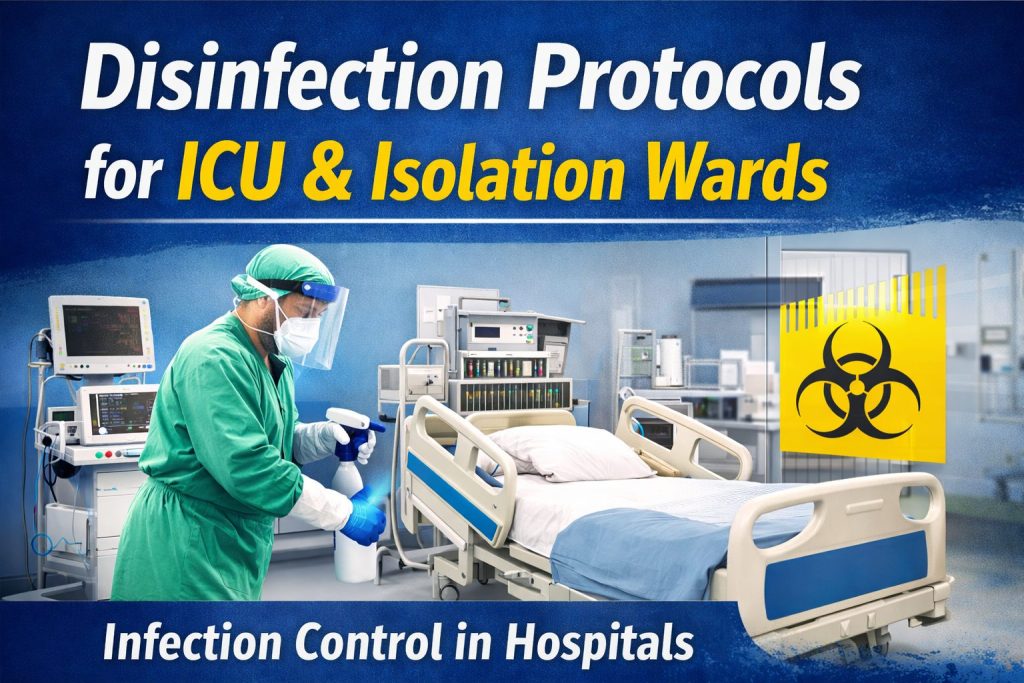
In critical care wards like ICU and isolation wards, a minor cleaning mistake can lead to serious hospital-acquired infections (HAIs). The patients admitted in this wards are usually weak and have low immunity, invasive devices’, or recent surgeries, making them highly vulnerable.
A clear and well documented disinfection protocol is not just a good practice, it is a core part of infection control in hospitals.
In this blog we tried to explain a structured, practical approach that hospitals in India can implement to maintain high safety standards.
Why ICU and Isolation Ward Disinfection is Critical
The ICU wards and Isolation rooms are made to handle
- Ventilated patietns
- Post operative cases
- Immunocompomised individuals
- Patient with infectious diseases
This ward are include high amount of the equipment like bed rails, monitors infusion pumps, ventilators panels, door handles, and nurse stations. Without strict infection control practices, pathogens can spread rapidly through surfaces, equipment, and healthcare workers hands.
Proper Infection Control Reduces
- Cross Contamination
- Device related infections
- ICU acquired infections
- Risk of outbreaks
Core Principles of Infection Control in Hospitals
Before We gone Through a detailed step by step protocol, hospital must follow three foundational pillars:
1. Standard Precautions
- Hand hygiene before and after patient contact
- Use of gloves, gowns, makes as per risk level
- Safe handling of sharps
2.Transmission Based Precautions
- Contact precautions
- Droplet precautions
- Airborne precautions
isolation wards must follow these protocols.
3. Environmental Cleaning and Disinfection
Routine and terminal cleaning must be done and clearly defined, documented, and monitored
Step-by-Step Disinfection Protocol for ICU and Isolation Wards
1. Routine Cleaning (Daily Schedule)
Frequency: Minimum Twice daily and as required
Areas to Cover:
- Bedside Railings
- Overbed Tables
- Monitors and Control Panels
- IV stands and Infusion pumps
- Door handles and switches
Process:
- Use standard hospital grade disinfectants (as per infection committee approval)
- Clean from clean areas to contaminated areas.
- Use color coded mops and cloths to avoid cross use
- Avoid dry dusting: Use damp dusting methods only
Keep the documentation of cleaning times, staff name, ad supervisor sign – it should be mandetory
2. High Touch Surface Disinfection
The most common and high touch areas must be disinfected more frequently, specially in ICU rooms
Example:
- Ventilator screens
- Syringe pump controls
- Bedside monitors
- Nurse call buttons
Alcohol based surface disinfectants or approved quaternary ammonium compounds are commonly used as per hospital policy
High-touch areas must be disinfected more frequently, especially in ICU settings.
Examples:
Ventilator screens
Syringe pump controls
Bedside monitors
Nurse call buttons
Alcohol-based surface disinfectants or approved quaternary ammonium compounds are commonly used as per hospital policy.
3. Terminal Cleaning After Patient Discharge
This is the most important step in infection prattices
When Required:
- Patient Discharge
- Transfer
- Death
- Isolation case clearance
Process Includes
- Remove all disposable items
- Cleaning of mattress, bed frame, and surrounding walls
- Disinfection of medical equipmwnt
- Cleaning of air vents and exhaust grills
- Floor disinfection with appropriate soulution
In some hospitals hydrogen peroxide fogging or UV disinfection may be used as an additional step. but manual cleaning is essential
4. Equipment Disinfection Protocol
Equipment and devices used in ICU must follow the classification based cleaning process
- Critical Items (enter sterile tissues) : Required sterilization
- Semi critical items – (Contacts Mucous membranes): High level disinfection
- Noon critical items- (Contact intact skin): Low to intermediate level disinfection
Clear tagging and labeling of equipment cleaning status reduce the risk of contamination
Prevention of Surgical Site Infection
ICU disinfection is play direct important role in prevention of surgical site infection. Mainly for post operative patients.
Key measures includes:
- Maintaining sterile dressing technique
- Proper cleaning of patient surroundings
- Minimizing hygiene compliance
- Sterile handling of drains and catheters
Contaminated environment can cause infection in perfectly performed surgery. Therefore environment hygiene is important and powerful factor in surgical recovery outcomes
Role of the Infection Control Committee (ICC)
Every hospital must have an active ICC responsible for
- Defining disinfection policies
- Selecting approved disinfectants
- Monitoring compliance
- Conducting infection surveillance
- Training housekeeping and nursing staff
Regular audits and microbial surface testing helps to evaluate the effectiveness of cleaning protocols
Staff Training and Accountability
Even the best written SOP will fail without proper execution
Hospitals must ensure
- Regular training of housekeeping staff
- Demonstration based cleaning workshops
- Clear display of cleaning schedules
- Random Compliance chesk
- Immediate corrective action if gaps are identified
Strong leadership is needed for infection control in hospitals to make it a continuous process not a one time task.
Documentation and Record Maintenance
For quality accreditation like NABH proper records are mandatory
- Cleaning log sheets
- Disinfectant dilution records
- Terminal cleaning checklists
- Equipment disinfection logs
Documentation helps to improve compliances and to protects hospitals during inspections and audits.
Common Mistakes to Avoid
- Reuse of the same mop in multiple zone
- Incorrect disinfection dilution
- Skipping high touch areas
- Inadequate contact time of disinfectant
- Poor ventilation after chemical use
Avoiding these small mistakes can improve infection control practices.
ICU and Isolation wards needs the highest level of hygiene discipline, A well planned disinfection protocol helps to protects patient, healthcare workers and the hospitals reputation.
Strong infection control in hospitals is depends on the consistency, accountability, and continuous monitoring. The proper use of these measures helps to reduce HAIs and to prevent surgical site infection and better clinical outcomes.
A clean environment is not just appearance it is ia critical component of patientn safety