
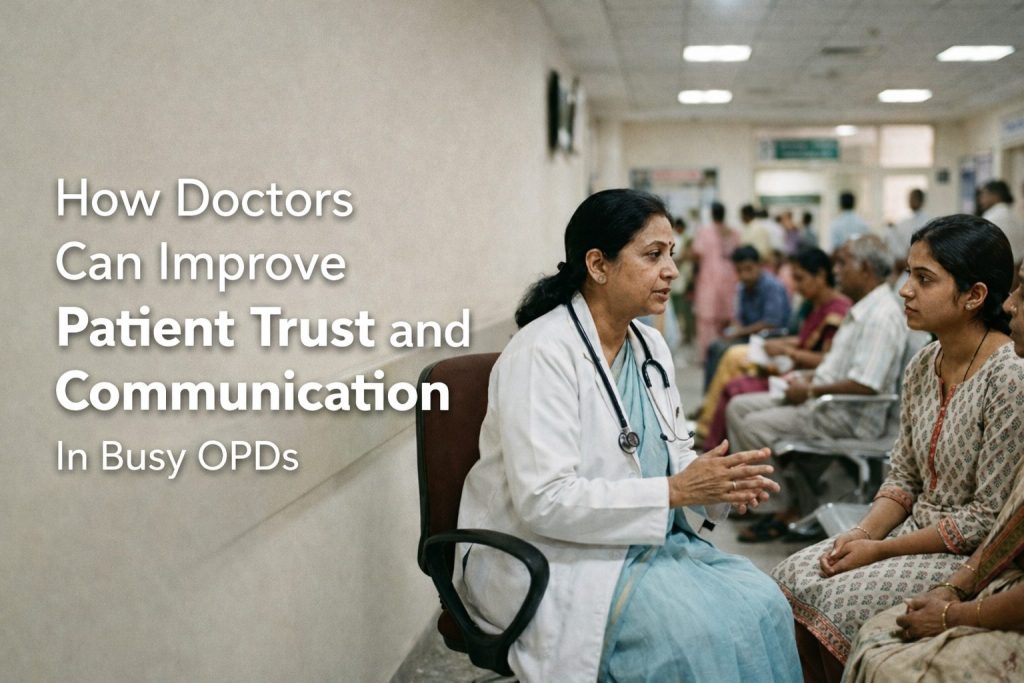
In today’s busy healthcare environment, Outpatient Departments (OPDs) are often crowded, time bound, and stressful for both doctors and patients. In this high patient flow and limited consultation time make doctors difficult to maintain strong communication and building trust and make it challenging. However, trust and clear communication are not optional they are essential for better diagnosis, treatment adherence and patient satisfaction.
In this blog we explains practical practical and effective ways doctors can improve patient trust and communication, even in busy OPD settings.
Why Patient Trust and Communication Matter
Trust is the foundation of every doctor patient relationship. When patients trust their doctors:
- They share symptoms more openly
- They follow treatment plans properly
- They are less anxious and more cooperative
Good communication helps to reduce misunderstandings. improve clinical outcomes, and enhances the overall reputation of the healthcare facility.
Common Challenges in Busy OPDs
Before improving any communication it is important to understand the key problems
- Limited Consultation time (2-5 minutes per patient)
- Long waiting queues leading to patient frstration
- Language barriers or low health literacy
- High stress and fatigue for doctors
- Lack of privacy in crowded OPDs
With this another small challenges can create a big impact.
Practical Ways to Improve Patient Trust and Communication
Start with a Warm Greeting
A simple greeting with eye contact can immediately built comfort. Even a 5 second interaction like:
“Namaste, how can I help you?”
create the positive environment. and it helps patient to feel respected and valued.
Listen Actively Without Interrupting
Manu patients complaints that doctors don’t listen completely. Let the patient explain their issue at least 30-40 seconds.
Active listening includes:
- Nodding
- Maintaining eye contact
- Avoiding distractions like mobile or paperwork
It helps to improve communication as well as accuracy in diagnosis and builds confidence.
Use Simple and Clear Language
Avoid using the complex medical terms. use simple local language.
Ex. instead of saying “hypertension” say “High BP”, “Gastroenteritis” say “stomach infection”
Clear and simple language helps patient understand their condition and treatment.
Explain the Treatment Briefly
Even in busy OPD, take 20-30 second to explain:
- What is problem is
- What medicine will do
- How long it will take to recover
patients follows the treatment when they understand it.
Maintain Eye Contact and Body Language
Non Verbal Communication matters a lot:
- Look at the patient, not just reports
- Sit in an open posture
- Avoid rushing
Good body language builds trust without adding extra time.
Show Empathy
Patients are often in stress and fear
Simple empathetic statements like:
- “I understand your concern”
- “Don’t worry, we will manage this”
helps to reduce anxiety instantly.
Manage Waiting Time Smartly
Long waiting time reduces trust consultation even begins
You Can :
- Inform patients about expected delays
- Use token systems
- Ensure proper seating and comfort
A well managed waiting area improve patient experience.
Use Support Staff Effectively
Train nurses and assistants to
- Collect basic history
- Guide patients
- Explain basic instructions
This helps to save doctors time and improve communication flow
Maintain Basic Privacy
Even in crowded OPDs., try to maintain some level of privacy:
- Lower your vice when discussing important issues
- use partitions if possible
Patients feel more comfortable sharing important details.
Encourage Questions
Ask patients:
“Do you have any doubts?”
This gives them confidence and ensures clarity.
Even if time is short, answering one question properly can make a big difference.
Role of OPD Setup in Communication
Infrastructure also plays an important role:
- Comfortable examination table
- Proper doctor seating arrangement
- Organized consultation space
Benefits of Better Communication in OPDs
When doctors focus on communication, the results are cleaer:
- Higher patient satisfaction
- Better treatment compliance
- Reduced follow up complications
- Stronger doctor patient relationship
- Positive word of mouth for hospitals
Improving trust and communication in busy OPDs is not about spending more time its about using the available time more effectively, small habits like listening carefully, speaking simply, and showing empathy can create a powerful impact.
Remember a patient may forget the waiting time but they will always remember how the doctor and staff treated them.